
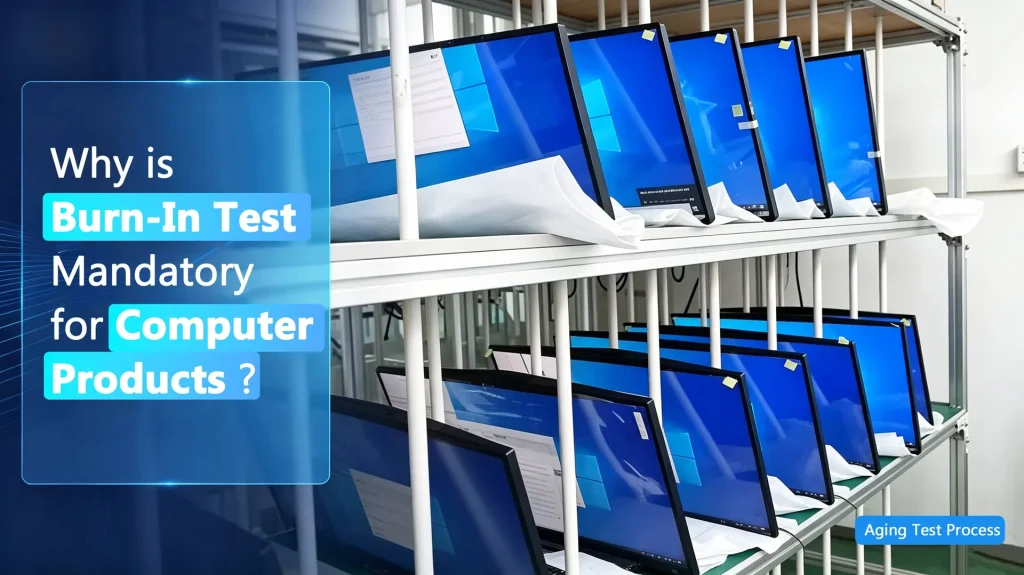
Standard testing only confirms a PC works at present, while burn‑in test ensures long‑term stability.
Many of our customers ask us the same question when planning hardware orders: “If every unit passes a full power-on and functional check before shipping, why invest extra time and cost in a dedicated burn-in test?”
The answer is straightforward: Standard testing only proves a device “works right now,” while a proper burn-in test guarantees it will “remain stable for the long haul.”
The vast majority of hardware failures do not happen right out of the box. Instead, they surface after days, weeks, or even months of continuous operation. The core purpose of burn-in testing is to simulate real-world usage scenarios in advance, screening out all hidden defects and latent failures inside our factory — so faulty units never reach your deployment site.
What is an Electronics Burn-In Test?
In simple terms, a burn-in test is a high-intensity, long-duration stress test run on fully assembled electronic devices.
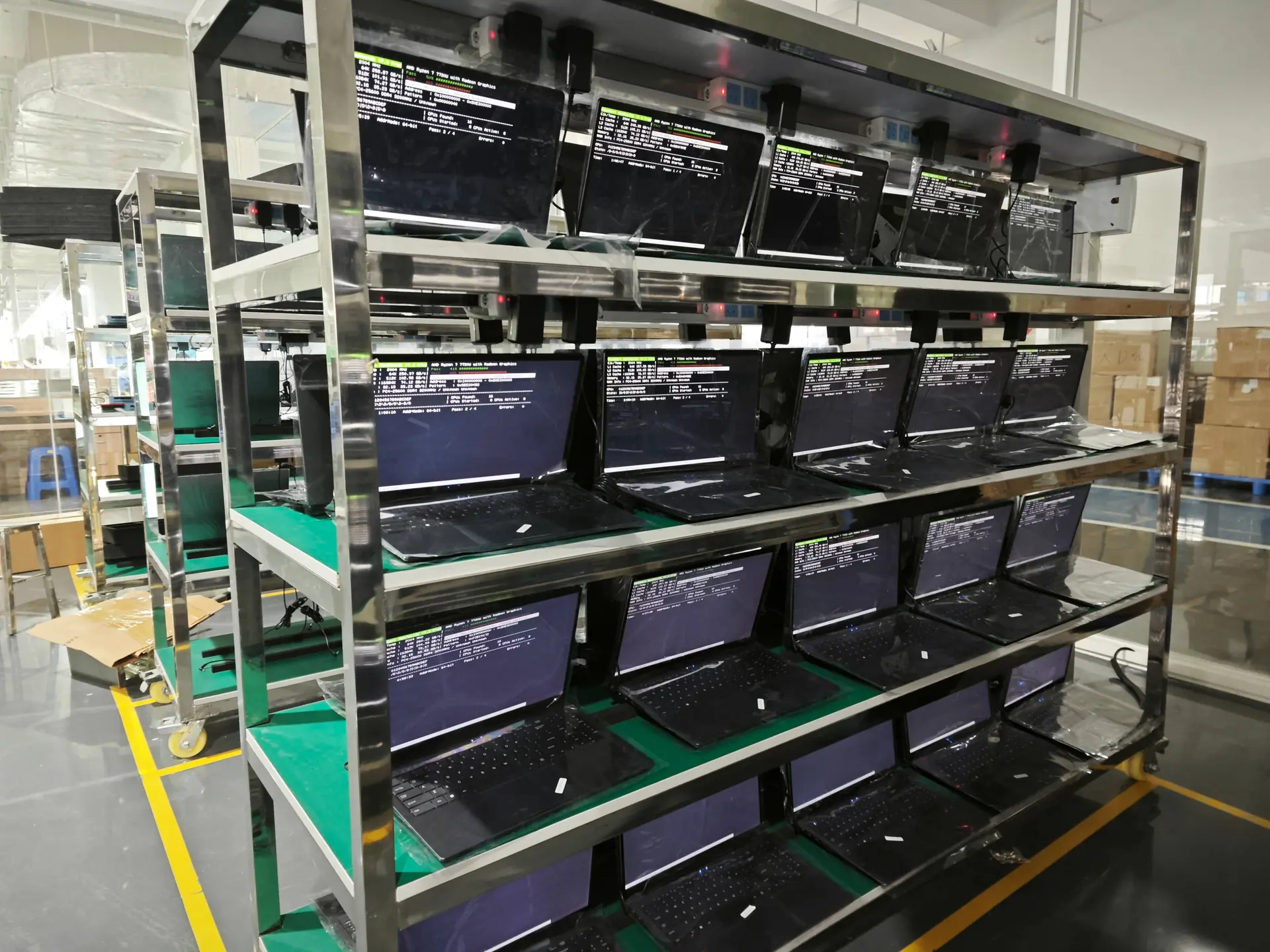
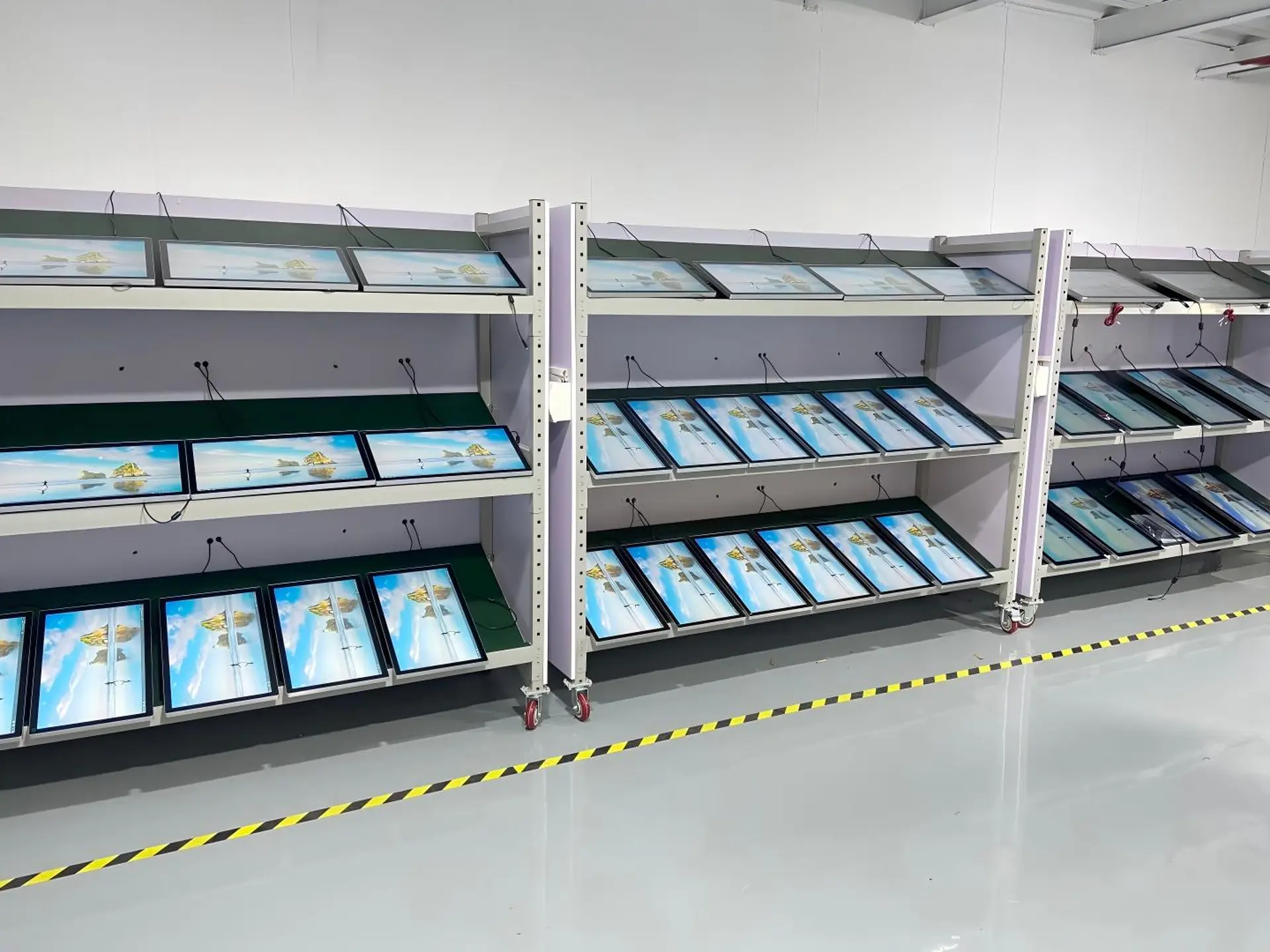
We place each unit under continuous power and full workload inside a professional test setup, mimicking demanding daily workflows, extended standby periods, and 24/7 nonstop operation common in industrial and commercial environments. After hours or even days of uninterrupted running, internal components build up full heat and hardware stays under sustained stress — forcing any underlying material, component or assembly defects to surface before they ever leave our facility.
- Standard Inspection: A quick “snapshot check” that only verifies basic, immediate functionality.
- Burn-In Testing: A thorough “endurance marathon” that validates long-term reliability under real-world operating stress.
Why Burn-In Testing Is Critical for Hardware Reliability
No matter how reputable the component brand, no electronics manufacturer can guarantee a 100% defect-free rate. A small percentage of parts, solder joints, and assembly issues fall into the category of latent defects.
These units perform perfectly on initial power-on. But as they run continuously, internal temperatures rise and hardware stays under heavy load, hidden failures begin to trigger one after another:
- Cold Solder Joints: Solder connections expand under heat, causing poor contact, random reboots, and sudden system crashes.
- Flawed Memory / Storage Chips: Under prolonged high-speed read/write stress, marginal components lead to blue screens of death (BSOD), drive dropouts, and severe performance lag.
- Improper Thermal Assembly: Uneven thermal paste application or blocked airflow causes overheating, resulting in thermal throttling and unstable performance.
- Unstable Power Supply (PSU): Sudden power drops, software crashes, or capacitor failure occur when the system runs at peak workload.
Standard power-on checks cannot detect these underlying issues at all. Only extended stress testing during burn-in will reliably catch them.
Put simply, burn-in testing pre-ages and stabilizes each unit on your behalf. By catching early-stage failures at the factory, we make sure every device delivered to you is a qualified, production-ready unit built for long-term use.
Burn-In Test vs No Burn-In Test: How Big Is the Real Difference?
To make it easy to compare, here’s a side-by-side look at how the two approaches perform in real-world deployment:
| Metric | Without Burn-In Testing ❌ | With Strict Burn-In Testing ✅ |
|---|---|---|
| Out-of-Box Condition | Appears flawless on the surface but carries severe latent risks | Fully validated; hardware integrity and thermal performance are optimized |
| Day-to-Day Experience | Works fine initially but fails frequently after short-term use | Ready to deploy out of the box; boots reliably and handles heavy workloads without issues |
| Common Failure Modes | Random BSODs, unexpected reboots, severe lag, network drops, and storage corruption | Smooth operation with minimal to zero hardware-related support tickets |
| 24/7 Operation Suitability | High failure rate in always-on applications (industrial PCs, servers, commercial hosts) | Effortlessly supports high-intensity, round-the-clock commercial and industrial use |
| Total Cost of Ownership | Very high: delays project timelines, inflates maintenance costs, and damages team productivity | Very low: eliminates the hassle of returns, exchanges, repairs, and unplanned downtime |
While burn-in testing adds to production cycle time, energy use, and labor costs, it is the single most impactful quality control step to drastically reduce field failure rates and protect your hardware investment — especially for bulk orders and fleet rollouts.
Conclusion: Quality Beats Luck for Long-Term Reliability
To sum it up in one sentence: Products without burn-in testing only “look good on the surface”; products that pass a rigorous burn-in test are truly durable, dependable, and built to last.
We enforce a 100% comprehensive burn-in process for every single device before it leaves our facility. This isn’t just a quality control policy — it’s our way of making sure every customer receives hardware they can count on for stable, long-term, worry-free operation.